Test Project-Planning-Design Discount Voucher & Free Sample Project-Planning-Design Questions
Wiki Article
DOWNLOAD the newest Exams4Collection Project-Planning-Design copyright from Cloud Storage for free: https://drive.google.com/open?id=1eqTboytOJdZ1_5c1vKDMk4-Cuhitt-GA
The Desktop NCARB Project-Planning-Design Practice Exam Software contains real NCARB Project-Planning-Design exam questions. This provides you with a realistic experience of being in an NCARB Project-Planning-Design examination setting. This feature assists you in becoming familiar with the layout of the NCARB Project-Planning-Design test and enhances your ability to do well on ARE 5.0 Project Planning & Design (PPD) (Project-Planning-Design) examination.
NCARB Project-Planning-Design Exam Syllabus Topics:
| Topic | Details |
|---|---|
| Topic 1 |
|
| Topic 2 |
|
| Topic 3 |
|
| Topic 4 |
|
| Topic 5 |
|
>> Test Project-Planning-Design Discount Voucher <<
Free Sample NCARB Project-Planning-Design Questions | Project-Planning-Design Reliable Test Topics
you can pass the Project-Planning-Design exam for the first time with our help. Perhaps you still cannot believe in our Project-Planning-Design study materials. You can browser our websites to see other customers’ real comments. Almost all customers highly praise our Project-Planning-Design Exam simulation. In short, the guidance of our Project-Planning-Design practice questions will amaze you. Put down all your worries and come to purchase our Project-Planning-Design learning quiz! You won't regret for your wise choice.
NCARB ARE 5.0 Project Planning & Design (PPD) Sample Questions (Q66-Q71):
NEW QUESTION # 66
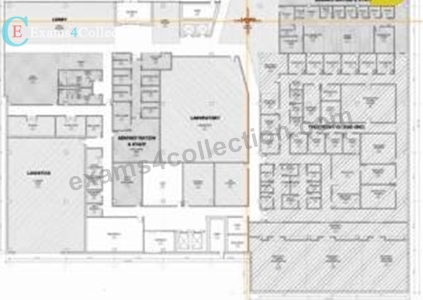
An architect has just received client approval of the Schematic Design documents for a three-story, outpatient medical clinic. The clinic is located within a mixed-use development governed by a City-approved Planned Development (PD) document. The medical clinic design utilizes standardized departmental layouts and includes outpatient clinics, as well as treatment spaces, administrative spaces and public/lobby spaces.
The site needs to accommodate four different vehicular traffic flows: patient traffic, staff traffic, service and delivery traffic, and emergency services traffic. In addition, a pedestrian plaza must connect to the mixed-use development sidewalks. The plaza must provide space for bicycle parking and will serve as the future bus stop.
The site design addresses several challenges related to building orientation. The southeast facade, with excellent visibility from the highway, is the location of all service equipment. The building entrance faces northwest, convenient to the parking but not visible from the highway.
The client believes future patient volumes will outgrow the clinic. The PD document allows for a planned Phase 2 development on the adjacent vacant site to the southwest. Phase 2 would include a second building (2 story, 80,000 BGSF) and/or a parking deck.
Other considerations for the project include:
* Protected tree requirements are defined in the PD document.
* Easy pedestrian access must be provided from Sycamore Boulevard.
* All required parking for the clinic must be accommodated on site.
* Programmed area includes 109,450 Departmental Gross Square Feet (DGSF) / 130,184 Building Gross Square Feet (BGSF).
* Exterior material percentages are dictated by the PD document and shall not exceed specific percentages for Primary and Secondary Finishes.
* All service equipment needs to be screened; see PD document for restrictions.
* Signage opportunities are important to the client.
* Acoustical privacy is a concern of the healthcare system.
The following resources are available for your reference:
* Drawings, including a perspective, plans, and exterior elevations
* Building Program, including client's departmental program and detailed program for Treatment 01 (Infusion)
* Exterior Material Cost Comparisons
* Planned Development Document
* IBC Excerpts, showing relevant code sections
* ADA Excerpts, showing relevant sections from the ADA Standards for Accessible Design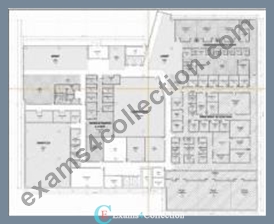
Which of the following design strategies would best address the vehicular circulation, visibility, and future expansion challenges for this project? Select the best answer.
- A. Position the pedestrian plaza on the southeast side adjacent to the highway to maximize visibility, cluster all vehicular access points on the southwest for future expansion ease, and place the main entrance on the northeast facade.
- B. Use a centralized parking deck adjacent to the northeast facade, locate all service equipment on the northwest facade to enhance visibility, and connect the pedestrian plaza internally through the building rather than adjacent sidewalks.
- C. Locate all vehicular traffic flows on the same access road to minimize site complexity and locate the main entrance on the southeast facade for maximum highway visibility.
- D. Separate vehicular traffic flows with distinct entry and exit points, locate service equipment on the southeast facade screened per PD requirements, and position the building entrance on the northwest side facing parking for convenient access.
Answer: D
Explanation:
Comprehensive and Detailed Explanation From Exact Extract:
Based on the project description and site context:
* Separating vehicular traffic flows into distinct entry and exit points improves safety and efficiency.
Patient, staff, service/delivery, and emergency vehicles each have different operational needs and access priorities. This separation reduces conflicts and congestion.
* Locating service equipment on the southeast facade, which has excellent highway visibility, is appropriate because service areas are typically screened but can take advantage of visibility for logistical purposes. The PD document restricts screening and material use here, so adherence to those guidelines is necessary.
* Positioning the main building entrance on the northwest side facing the parking lot optimizes patient and visitor convenience, even though it has less visibility from the highway. This respects pedestrian access from Sycamore Boulevard and aligns with parking access, enhancing user experience.
* Future expansion (Phase 2) on the adjacent southwest vacant site is planned, so site circulation and building orientation must allow for growth without major redesign.
* Placing the pedestrian plaza connecting to existing sidewalks with bicycle parking and future bus stop meets ADA and site planning requirements, ensuring multimodal accessibility.
* The strategy in Option B addresses client priorities, PD document constraints, visibility, safety, and operational efficiency, consistent with NCARB ARE 5.0 Project Integration of Program and Systems content focusing on complex site planning and programmatic coordination.
* Options A, C, and D introduce compromises in circulation, visibility, or expansion potential that conflict with the project constraints and client needs.
References:
ARE 5.0 Project Planning & Design Content Outline: Project Integration of Program and Systems - Site Planning and Vehicular Circulation City-approved Planned Development (PD) Document Excerpts ADA Standards for Accessible Design - Pedestrian Access and Circulation The Architect's Handbook of Professional Practice, 15th Edition, Chapter 7: Site Design and Program Integration
NEW QUESTION # 67
For a three-story building, which of the following is considered a vertical irregularity with respect to seismic design?
- A. The building has a significant reentrant corner on the front side.
- B. The effective mass of the roof is one-half the mass of the floor immediately below.
- C. Interior symmetrically placed shear walls are four times as stiff as perimeter columns.
- D. The effective mass of story 2 is two times the mass of story 1.
Answer: D
Explanation:
Comprehensive and Detailed Explanation From Exact Extract:
In seismic design, vertical irregularities are discontinuities or abrupt changes in the building's mass, stiffness, or geometry that can affect seismic response and increase vulnerability during an earthquake. The NCARB ARE 5.0 Project Planning & Design guidelines describe vertical irregularities as changes occurring along the height of the building.
* Option C describes a mass irregularity where story 2 has twice the effective mass of story 1. According to seismic code provisions (such as those referenced in ASCE 7 and adopted by IBC), a vertical mass irregularity is present if the effective seismic mass in any story is more than 150% (1.5 times) or less than 70% (0.7 times) of the mass of an adjacent story. Here, doubling the mass is a significant vertical irregularity that affects the dynamic behavior and design.
* Option A, the roof mass being half that of the floor below, is a decrease in mass but less than the typical threshold of 30% difference (the ratio is 0.5, which is a 50% difference). This might also be considered, but the mass irregularity is more typically flagged at the 1.5x or 0.7x threshold and tends to be more critical in lower floors, making C the clearer choice.
* Option B describes a reentrant corner, which is a horizontal plan irregularity, not vertical. Reentrant corners affect torsional behavior but are not classified as vertical irregularities.
* Option D refers to stiffness differences between interior shear walls and perimeter columns but, when symmetrically placed, this is not necessarily considered an irregularity. Vertical stiffness irregularities are defined by abrupt stiffness changes in vertical elements, but symmetry mitigates torsional effects.
The presence of vertical mass irregularities significantly influences seismic forces distribution, dynamic response, and the potential for torsional motions. Designers must recognize these irregularities per NCARB guidelines and apply appropriate structural detailing and design modifications to meet life-safety requirements.
References:
ARE 5.0 Project Planning & Design Outline: Environmental Conditions and Context - Seismic Design Considerations NCARB ARE 5.0 Guidelines, Seismic Design and Irregularities ASCE 7-16, Chapter 12 - Seismic Design Criteria The Architect's Handbook of Professional Practice, 15th Edition, Chapter 13: Building Codes, Standards, and Regulations
NEW QUESTION # 68
An architect has just received client approval of the Schematic Design documents for a three-story, outpatient medical clinic. The clinic is located within a mixed-use development governed by a City-approved Planned Development (PD) document. The medical clinic design utilizes standardized departmental layouts and includes outpatient clinics, as well as treatment spaces, administrative spaces and public/lobby spaces.
The site needs to accommodate four different vehicular traffic flows: patient traffic, staff traffic, service and delivery traffic, and emergency services traffic. In addition, a pedestrian plaza must connect to the mixed-use development sidewalks. The plaza must provide space for bicycle parking and will serve as the future bus stop.
The site design addresses several challenges related to building orientation. The southeast facade, with excellent visibility from the highway, is the location of all service equipment. The building entrance faces northwest, convenient to the parking but not visible from the highway.
The client believes future patient volumes will outgrow the clinic. The PD document allows for a planned Phase 2 development on the adjacent vacant site to the southwest. Phase 2 would include a second building (2 story, 80,000 BGSF) and/or a parking deck.
Other considerations for the project include:
* Protected tree requirements are defined in the PD document.
* Easy pedestrian access must be provided from Sycamore Boulevard.
* All required parking for the clinic must be accommodated on site.
* Programmed area includes 109,450 Departmental Gross Square Feet (DGSF) / 130,184 Building Gross Square Feet (BGSF).
* Exterior material percentages are dictated by the PD document and shall not exceed specific percentages for Primary and Secondary Finishes.
* All service equipment needs to be screened; see PD document for restrictions.
* Signage opportunities are important to the client.
* Acoustical privacy is a concern of the healthcare system.
The following resources are available for your reference:
* Drawings, including a perspective, plans, and exterior elevations
* Building Program, including client's departmental program and detailed program for Treatment 01 (Infusion)
* Exterior Material Cost Comparisons
* Planned Development Document
* IBC Excerpts, showing relevant code sections
* ADA Excerpts, showing relevant sections from the ADA Standards for Accessible Design The developer decides that the 4-inch terra cotta exterior veneer is too expensive, and wants to replace the terra cotta with an alternative finish in its entirety.
Which of the following alternative materials should the architect suggest to reduce cost and meet the Planned Development Document requirements? Check the two that apply.
- A. Standard Brick
- B. Artisan Brick
- C. Cultured Stone
- D. Metal Panels (Fluoropolymer finish)
- E. Low Priced Stone
- F. Earth Tone EIFS
Answer: A,F
Explanation:
To reduce costs while complying with Planned Development (PD) document restrictions on exterior finishes, the architect should select materials that are less expensive than terra cotta yet meet aesthetic and code requirements:
Standard brick (C) is a cost-effective, durable alternative with broad acceptance.
Earth tone EIFS (E) (Exterior Insulation and Finish System) offers an economical and versatile finish that can replicate various textures and colors while reducing costs.
Low priced stone (A) and cultured stone (B) may still be costly or not permitted per PD document.
Artisan brick (D) and metal panels (F) may exceed allowed percentages or not fit aesthetic guidelines.
References:
Planned Development Document
ARE 5.0 PPD - Project Integration of Program and Systems
The Architect's Handbook of Professional Practice, 15th Edition - Exterior Finishes
NEW QUESTION # 69
The design of a large, one-story building to be used for the storage of confidential documents is being evaluated for security. The owners wish to have as much storage space as possible.
Which of the following design strategies would be the most economical solution to maximize security?
- A. Minimize building entries and windows
- B. Add visual surveillance cameras
- C. Increase building setbacks
Answer: A
Explanation:
Comprehensive and Detailed Explanation From Exact Extract:
Minimizing building entries and windows reduces potential unauthorized access points, increasing security while maximizing usable interior storage space. This approach is cost-effective compared to increasing setbacks (which requires more land) or installing surveillance systems (which adds operational costs).
NCARB PPD guidelines recommend minimizing access points and openings for high-security storage buildings.
References:
ARE 5.0 PPD - Environmental Conditions and Context, Security Design
The Architect's Handbook of Professional Practice, 15th Edition - Crime Prevention Through Environmental Design (CPTED)
NEW QUESTION # 70
When designing a three-story wood-frame home located in a high wind region, the addition of a green roof with a two-foot soil bed would do which one of the following?
- A. Require additional tie-downs
- B. Increase the structure's resistance to racking
- C. Increase the structure's resistance to overturning
Answer: A
Explanation:
Comprehensive and Detailed Explanation From Exact Extract:
Adding a green roof with a two-foot soil bed significantly increases the dead load on the roof and affects the uplift forces caused by high winds. This heavier roof mass necessitates additional structural tie-downs or anchorage to resist wind uplift and prevent overturning or structural failure.
The added weight does not inherently increase resistance to overturning (A) or racking (C); rather, it increases loads that require structural reinforcement.
References:
ARE 5.0 PPD - Building Systems and Assemblies, Structural Loads and Wind Design The Architect's Handbook of Professional Practice, 15th Edition - Wind-Resistant Design
NEW QUESTION # 71
......
Our Project-Planning-Design exam copyright offer you a wide and full coverage of the keypoints on the career-oriented certification and help you copyright without facing any difficulty. And you will find that the subject is well compiled to the content of the Project-Planning-Design training guide in our three different versions. They are the PDF, Software and APP online. The content of these versions is the same, but the displays of our Project-Planning-Design learning questions are all different. You can choose the favorate one.
Free Sample Project-Planning-Design Questions: https://www.exams4collection.com/Project-Planning-Design-latest-copyright.html
- Project-Planning-Design Test Cram: ARE 5.0 Project Planning & Design (PPD) - Project-Planning-Design Exam Guide - Project-Planning-Design Study Materials ???? Open ( www.vce4dumps.com ) enter ⇛ Project-Planning-Design ⇚ and obtain a free download ????Valid Project-Planning-Design Exam Labs
- Easy To Use and Compatible Pdfvce NCARB Project-Planning-Design Questions Formats ???? Copy URL ➤ www.pdfvce.com ⮘ open and search for 《 Project-Planning-Design 》 to download for free ????Project-Planning-Design Test Dates
- Project-Planning-Design Latest Test Vce ???? Project-Planning-Design Reliable Guide Files ???? Project-Planning-Design Latest Test Vce ???? Copy URL ▶ www.examcollectionpass.com ◀ open and search for ➽ Project-Planning-Design ???? to download for free ????Project-Planning-Design Valid Exam Guide
- Project-Planning-Design Learning Materials - Project-Planning-Design Test Simulate - Project-Planning-Design Best Questions ???? Open website ▷ www.pdfvce.com ◁ and search for ➥ Project-Planning-Design ???? for free download ????Valid Project-Planning-Design Exam Labs
- NCARB Test Project-Planning-Design Discount Voucher: ARE 5.0 Project Planning & Design (PPD) - www.examcollectionpass.com Test Engine Simulation ???? Open 《 www.examcollectionpass.com 》 enter ⏩ Project-Planning-Design ⏪ and obtain a free download ????Top Project-Planning-Design Questions
- Your Investment with Pdfvce NCARB Project-Planning-Design Practice Test is Secured ???? Easily obtain ➽ Project-Planning-Design ???? for free download through [ www.pdfvce.com ] ????Top Project-Planning-Design Questions
- Project-Planning-Design Latest Dumps ???? Project-Planning-Design Valid Exam Guide ???? Project-Planning-Design Test Dates ???? Open ➡ www.vce4dumps.com ️⬅️ enter ➡ Project-Planning-Design ️⬅️ and obtain a free download ????Project-Planning-Design 100% Accuracy
- Project-Planning-Design Lab Questions ???? Project-Planning-Design Valid Exam Dumps ???? Project-Planning-Design Reliable Exam Papers ???? Enter 《 www.pdfvce.com 》 and search for ➡ Project-Planning-Design ️⬅️ to download for free ????Project-Planning-Design Valid Exam Guide
- Exam Project-Planning-Design Cram Questions ???? Project-Planning-Design Exam Cram Review ???? Project-Planning-Design Latest Test Vce ???? Enter ⏩ www.vce4dumps.com ⏪ and search for ( Project-Planning-Design ) to download for free ????Pdf Project-Planning-Design copyright
- Project-Planning-Design Test Cram: ARE 5.0 Project Planning & Design (PPD) - Project-Planning-Design Exam Guide - Project-Planning-Design Study Materials ???? Search for 《 Project-Planning-Design 》 and download it for free on ▛ www.pdfvce.com ▟ website ????Valid Project-Planning-Design Exam Labs
- Valid Project-Planning-Design Exam Labs ???? Project-Planning-Design Reliable Exam Papers ???? Project-Planning-Design Latest Test Vce ???? Search for “ Project-Planning-Design ” and easily obtain a free download on ➥ www.practicevce.com ???? ????Project-Planning-Design Valid Test Practice
- maciexsaq334416.verybigblog.com, listbell.com, iwanwbft213844.azzablog.com, gerbibayn292.blogspot.com, anyaekbc483027.blogproducer.com, kianaiunm660411.wikiap.com, mysterybookmarks.com, victorlwvr593996.wikidank.com, tedsgiw580015.bloggazzo.com, singnalsocial.com, Disposable vapes
P.S. Free 2026 NCARB Project-Planning-Design dumps are available on Google Drive shared by Exams4Collection: https://drive.google.com/open?id=1eqTboytOJdZ1_5c1vKDMk4-Cuhitt-GA
Report this wiki page